What filmmaking choices reveal
Film is often mistaken for spoken theatre with pictures attached. But the true power of cinema operates below conscious awareness: in the focal compression of a telephoto lens, the delay of an audio cut, or where two actors stand relative to a doorway.
The Eye Follows Intention
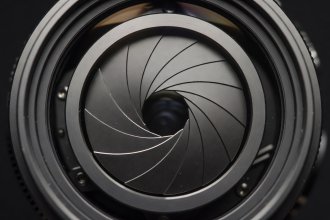
When a director chooses between a 28mm wide lens and an 85mm portrait lens, they aren't merely framing the subject; they are altering how close the audience feels to the character's subconscious fear. Wide lenses exaggerate movement towards the lens; long lenses flatten distance, trapping characters against their backgrounds.
Four Craft Elements Every Viewer Can Read
You do not need a film school degree to spot the craft decisions that elevate ordinary filmmaking into enduring art. Here are four foundational pillars to look for:
1. Blocking and Spatial Hierarchy
Notice how actors move within the frame before anyone speaks. In Akira Kurosawa’s High and Low (1963), the entire first half takes place inside a single hilltop living room. Kurosawa arranges five actors in dynamic geometric triangles—shifting positions to reveal who holds moral authority as kidnapping ransom negotiations unfold.
2. Diegetic Sound vs Non-Diegetic Score
Does music tell you what to feel, or does ambient room tone reveal character vulnerability? In Joel and Ethan Coen’s No Country for Old Men (2007), there is virtually no traditional orchestral score. The tension comes entirely from Foley work: the creak of floorboards, the pneumatic hiss of a cattle gun, and the dry Texas wind whistling under hotel doors.
3. The Rhythm and Motive of the Cut
An edit is not simply a way to join two scenes; it is a collision of concepts. In Sergei Eisenstein’s montage theory, cutting between two disparate images generates a third meaning in the spectator's mind. Today, notice whether cuts happen on character movement (cutting on action to preserve fluid reality) or across glances (eyeline matches to build psychological intimacy).
4. Practical Lighting and Colour Palettes
Cinematographers like Roger Deakins (Blade Runner 2049) and Gordon Willis (The Godfather) light scenes with deliberate source logic. When Willis underexposed Marlon Brando's eyes in overhead shadow, he forced the viewer to scrutinise Vito Corleone’s inscrutable moral code.

Case Study: Depth and Restraint in Japanese Masterworks
Consider the restraint of Yasujirō Ozu in Tokyo Story (1953). Ozu placed his 50mm lens approximately three feet off the tatami mat floor—the eye height of an adult sitting cross-legged. He refused pans and tracking shots, transitioning between scenes with still "pillow shots" of trains, smokestacks, or washing lines.
By removing camera acrobatics, Ozu leaves the viewer nowhere to hide from the quiet heartbreak of ageing parents visiting busy adult children. The craft choice is profound humility.
| Technique | Exemplary Work | Director / Cinematographer | Artistic Effect |
|---|---|---|---|
| Dolly Zoom (Vertigo Effect) | Vertigo (1958) | Alfred Hitchcock • Irmin Roberts | Simultaneous forward track and zoom out creates acute visual vertigo |
| Unbroken Steadicam Long Take | Goodfellas (1990) | Martin Scorsese • Michael Ballhaus | The Copacabana kitchen entrance seduces the viewer into underworld luxury |
| Subjective Sound Filter | Sound of Metal (2019) | Darius Marder • Nicolas Becker | Muffled low-frequency audio tracks Ruben's traumatic hearing loss directly |
| Deep Focus Staging | Citizen Kane (1941) | Orson Welles • Gregg Toland | Keeps foreground, midground, and background equally sharp to reveal power imbalances |